


Distance: 3.5 km or about 2 miles
Norwich is an old city which has a saying that you can pray in a different church on every Sunday and drink in a different pub for every day in the year. Our walk will highlight some of the history associated with Edith Cavell along with some other interesting highlights.
We start at Norwich Station, this is a Grade II listed building and was one of three railways stations in Norwich, the others being Norwich Victoria and Norwich City. The current station opened on the 30th April 1844. Then a year later in December 1845, the Eastern Counties Railway, an amalgamation with the Norwich and Brandon Railway, opened carrying passengers between Norwich and Shoreditch in London via Cambridge and Bishops Stortford.
The station was also the gateway for many of Edith’s journeys including traveling to Brussels where she worked as a governess and nurse. It is also the place where her final journey came to an end as a national heroine after her state funeral at Westminster Abbey on the 15th May 1919.
Head across the station car park crossing over Thorpe Road before the bridge and follow Riverside Road. About half way on your left you can seen the remains of an old ferry house. This is the old Pulls Ferry station but before that it was the watergate for a canal which the monks built to ferry stone, which came from Caen in France, and building materials for the construction of the cathedral. The building was renamed after John Pull, who ran a ferry across the Wensum from 1796 to 1841, it continued to operate until 1943.
Now continue along Riverside Road to our first stop.
1. Lollards Pit
69-71 Riverside Rd, Norfolk NR1 1SR
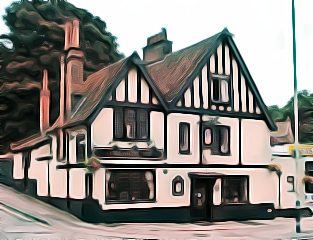
This is a large 17th Century pub and was one of the first to be built outside the city walls. Initially it was called the King’s Arms until 1975 and then the Bridge House until 2012 when it was renamed Lollards Pit. The current name comes from the Lollards uprising movement in the mid-14th century which called for church reformation and the site of the executions of the followers of the Lollard movement.
The movement was inspired by the teachings of John Wycliffe, an Oxford theologian. Lollards is a derogatory nickname from a Dutch word meaning mumbler. They believed the bible was the ultimate authority and advocated for its translation into English, so everyone could access it. They viewed the Church as corrupt and challenged its wealth and hierarchy suggesting that its vast land and riches should support the poor more.
They rejected the Catholic practices like the belief that bread and wine in the Eucharist physically become the body and blood of Christ along with the necessity of confession to a priest. They even considered that the praying to saints and images to be idolatry.
Religious authorities viewed Lollardy as a threat to the established social and political order. Then in 1401, the statute De heretico comburend was enacted authorising the burning of heretics at the stake. The execution site was located outside the city walls by Bishops Bridge and condemned Lollards were held in cells overnight (now the pubs cellar) before being executed. No one knows the excat number of people executed here but at least 50 people were burned during the reign of Queen Mary I (Bloody Mary).
Exit the pub and cross over the road to Bishops Bridge. The was the first bridge across the Wensum and now the only remaining medieval bridge in Norwich. It is named after the entrance to the Bishop’s Palace and is a now a scheduled ancient monument.
The bridge has seen a lot of history in its time including the famous Kett’s rebellion in 1549 against the enclosure of land. At the time the bridge had a gatehouse which the rebels attacked and managed to pull off the bars that secured the gate before burning them after they had entered the city.
You can read more about Kett’s rebellion here
Just across the bridge is our next pub.
2. The Red Lion
79 Bishopgate, Norwich NR1 4AA

This is large Victorian corner pub and has been a licenced premises since the 1700’s. In 1906, the Norfolk Chronicle records that the licensee applied for the lifting of a restriction on females entering a room where music, singing and dancing took place. Before the restriction, men had to accompany young women, but not girls under the age of 16, to the concert room. There were reports that the police had to be called on numerous occasions because of the trouble that the restriction caused.
Until 1982, women in the UK could legally be refused service at a bar. Journalist Anna Coote and lawyer Tess Gill took the policy to court and won, after being banned from standing at the bar of the El Vino pub in Fleet Street. They argued that if their money was equal to men’s then their rights to be served should also be equal. The judge ruled that because the venue was one of the most significant “gossip shops of Fleet Street” the journalists were actually being put at a professional disadvantage by being segregated. The pub’s rule was deemed to be in breach of law and the practice was outlawed with the ban being lifted and the centenary law scrapped.
During WW2, Norwich suffered several bombing attacks and the pub was damaged in April 1942. These bombing raids were chosen for their cultural and historical value not as a strategic or military target. Significant targets hit included the Morgan’s Brewery building, Coleman’s Wincarnis works, City Station, the Mackintosh chocolate factory, and shopping areas including St Stephen’s Street and St Benedict’s Street, the site of Bond’s department store (now John Lewis) and Curl’s department store. The large Harmer’s clothing factory on St Andrews Street received a direct hit. In 1945 the city was also the intended target of a brief V-2 rocket campaign, though all these missed the city.
In 2020, the pub closed despite a campaign from locals to save it. Then in 2021, it was saved by new owners who currently run two other pubs in Norwich, the Trafford Arms and the Unthank Arms. The freeholder is the Great Hospital Charity and they invested a substantial sum to help refurbish the building. The Great Hospital owned a lot of land around Norwich Cathedral (map below):

When leaving the pub turn right by the car park and follow the riverside path to Cow Tower. It is an artillery tower on the bend of the River Wensum built in 1398 in response to the threat from France. The tower played an important role in the aforementioned Kett’s Rebellion when it was hit by artillery fire damaging the parapets.
Continue along the Riverside Walk and you soon come to the Swan Pit Sluice Gate on your left as you cross a small bridge. This is very rare and was used for the breeding of swans for the Master of the Great Hosptial, who since medieval times had the right to cull swans and provide them for feasts.
Constructed in 1793, especially for containing the hospital cygnets to be fattened on grain and sold. One of them was sent to Sandringham every year as a gift to the monarch. The pit was still in use until WW2 when it was forced to close due to the grain shortage. By this time, the hospital had been supplying oven-ready swans for the tables of the rich all over the country. The birds were dispatched by train travelling in wicker baskets.
It is now Grade II listed and possibly the only one in existence in the world, so worth a stop to take a look.
Now keep walking along the Riverside Walk and at the Jarrod Bridge turn left into Saint Helens Wharf car park. Exit out the other side to our next pub.
3. The Adam and Eve
17 Bishopgate, Norwich NR3 1RZ

This pub is claimed to be the oldest pub in the city with a reference to it made in 1249. It was probably the brewhouse for the men building the nearby Cathedral and operated by the Benedictine monks from the nearby Great Hospital. It was the last pub in Norwich to serve ale from the barrel until a bar was installed in 1971.
Heading back to the Kett’s rebellion, this pub played its part. Edmund Sheffield commanded a cavalry of men to charge and attack the rebels at Cathedral Close in an attempt to quell the uprising. Unfortunately, Edmund fell from his horse and he removed his helmet in surrender when one of the rebels attacked him with a cleaver. Edmund was taken to the nearby Adam and Eve, where he would later die from his wounds.
Another great story attached to this pub is the smuggling operation run by Elizabeth Howes. She would use a wherry to transport sacks of sand from Great Yarmouth to Norwich. Sand was used in spittoons and on the floor of pubs to soak up the beer. It is thought the sacks hid smuggled alcohol which was then sold to pubs around the city. She is also thought to have smuggled out a body but who knows.
In 1905, the pub nearly lost its licence when the Chief Constable opposed its renewal. The reasons given where that the gates near the pub would be locked in the early hours of the morning preventing the police from properly surveying the pub. An agreement was reached and the pub got its licence in return for not locking the gates. Again in 1908, the police were against the renewal of its licence, this time it was because there were three other pubs nearby and the pub was too far back from the main road. Licence renewed by unanimous decision.
1972, saw another change with the new pub sign being too risque. A slew of complaints from the public resulted in the genitalia of Adam and Eve being painted over with a very small fig leaf.
Now turn left up Bishopgate and enter the Cathedral grounds at the bend of the road. The road is called The Cl and follow this as it winds it way to the Cathedral. In a short while you will see the grave of Edith Cavell, so please stop and pause for while. It is her final resting place within the old monk’s burial ground known as Life’s Green. Her family wanted her to be laid to rest here near her home rather than at Westminster Abbey.
Keep following the road turning right passing the Cloisters and onto the main green in front of the Cathedral. Here you will see two statutes, one for Wellington and the other for Nelson. Exit through the main gate turning right and right again down Palace Street. Continue down to our next stop.
4. Wig and Pen
6 St Martin-At-Palace Plain, Norwich NR3 1RN

Located on St Martin at Palace Plain, an area that was the site of a pitched battle between the King’s forces and the Kett’s rebellion in 1549. In 1760, it was granted its first licence and was named The White Lion. The name was changed in 1985 to its current title after the new magistrates court opened close by.
It has become a staple of the real ale circuit and a must go-to for members of CAMRA.
Exit and turn right down Bedding Lane to Quayside and turning left follow the river to Fye Bridge. This bridge connects the north and south of the city and is perhaps the oldest surviving bridge site in Norwich. What you see now is a 1933 brick replacement of the old iron bridge, previously a stone bridge around 1400.
On the opposite bank where the trees are was the location for a ducking stool. Here, Margaret Crookhill, who had called Merable Church a witch and had narrowly avoided the cage in 1628, was threatened with a ducking if more complaints were made against her. Another woman, Mary Clay, was ducked three times at this stool in 1670. The west side of the bridge featured a fortified gate until 1791.
Our next stop is ahead of you.
5 . The Ribs of Beef
24 Wensum St, Norwich NR3 1HY

The 14th century original building was destroyed in the great fire in 1507. It became an ale house in 1743 when it was first named the Ribs of Beef. In 1898, the road frontage was demolised and rebuilt further back to allow the new tramway. In the 1920’s, Youngs and Crawshay Brewery owned the pub and renamed it the Fye Bridge Tavern in 1928 to celebrate the new bridge.
Then in 1958, Bullards Brewery took over and delicenced the pub when the brewery went into liquidation. Many years later in 1985 it was relicenced as the Ribs of Beef once again, it was the first example of a new liquor licence being granted in Norwich since WW2. December 1997, the name was spotted with the subtitle ‘DEBONED’ following the government ban on all beef being sold on the bone.
Exit turning right and head down the small alleyway on your right between the pub and the nextdoor building. This will take you to a small green square behind the buildings that line Elm Hill. This is a good example of what old Norwich looked like with weavers cottages and small yards. You can tell a weavers cottage from the large windows on the top floor allowing lots of light to enter the room with the loom.
Diagonally across the small green space walk through a small alley to Elm Hill. This is an historic cobbled lane with many Tudor buildings. It has been used in many television and film productions from Stardust (2007) to Lovejoy.
The great fire of Norwich destroyed over 700 buildings and the only building to survive in this location was the Britons Arms, surprisingly it has a thatched roof even to this day. By 1926, the decline of the weaving industry saw the area become neglected with areas of poverty and squalor. The Norwich Corporation wanted to demolish the area but at the last moment was stopped by a single vote.
Renovation work started in 1927 and the Corporation purchased some of the properties with more made after the war. So, today with a few exceptions, Norwich City Council still owns most of the buildings on Elm Hill.
Turn left past the Britons Arms and up the hill then right down Princes Street. You will now pass Blackfriar’s and St Andrew’s Halls on your left. You may have noticed the word “Plain” at the end of many street names, it derives from the Low Countries (The Netherlands, etc) and in modern Dutch, a ‘plein’ is an open rectangular space surrounded by buildings.
It was in 1566 that the Fourth Duke of Norfolk requested Queen Elizabeth’s permission to invite ‘thirty Douchemen’ to help revive Norwich’s flagging textile trade. The following year this trickle became a flood when Protestants from the Spanish Netherlands escaped the religious intolerance of Philip II of Spain. But the word ‘plain’ for an open space predated these arrivals: Nicholas Sotherton’s eye-witness account of Kett’s 1549 rebellion refers to ‘the playne before the pallace gate’ so the word was an earlier introduction, part of the city’s already long association with the Low Countries.
Now cross over St Andrews Street and up St Andrews Hill passing St Andrews Church on your left. At the top turn right into Bedford Street and our next pub.
6. The Wildman
29 Bedford St, Norwich NR2 1AG

A one room city center bar apparently named after Peter the Wild Boy, who was brought to England by George I. There are several stories associated with this person, even one that suggests Edgar Rice Burroughs based his ‘Tarzan of the Apes’ story on this feral child.
Below are some links which you can read further and make your own assumptions:
- https://www.hrp.org.uk/blog/peter-the-wild-boy-from-hanover
- https://www.bbc.co.uk/news/magazine-14215171
- https://en.wikipedia.org/wiki/Peter_the_Wild_Boy
Exit and turn right down Bedford Street then left up Swan Lane. Continue into Castle Street and in a short while turn left up Davy Place and in front of you is Norwich Castle.
If you wish to visit the Castle, I would recommend the Twilight Ticket which is available 1 hour before closing and is substantially cheaper than the standard day admission.
I won’t go into the history of the castle here as we have a few more places to see.
At the end of Davy Place, turn right and then right again into Arcade Street. In front of you now is the fantastic Royal Arcade, this is is where Victorian architecture and Art Nouveau. Opened on the 24th May 1899, is was hailed as a fragment of Arabian Nights dropped into the heart of the old City. It occupies the site of the former Royal Hotel and Angel Inn.
The tiling was manufactured by Royal Doulton from Carrara Ware (otherwise known as Carrara Marble) and the angel that is above the entrance in front of you is in recognition of the Angel Inn that stood here.
Head through the Arcade and take your time to look at the beautiful architecture and imaging yourself back in the early 1900’s doing some window shopping.
When you exit the arcade you are now on Gentlemans Walk which was originally Nether Row, or the lowest street of the market. This was where the remnants of the market wares, such as rotting food and horse manure, would gentle seep to being downhill from the market in front of you.
By the second half of the 17th century old barriers to retail selling were coming down and superior shops geared to gentry tastes were opening. “Nether Row” became a favourite promenade for the gentry and earned the name which it still holds today “Gentleman’s Walk”. “The Walk” had high quality shops selling luxury goods – hats, gloves, leather goods, tea and coffee. It was an hospitality centre with at least 4 large coaching inns facing the Market Place. Only The Lamb now remains.
Take a wander through the market with its collection of clothing, food and other paraphernalia to the impressive City Hall.
The new City Hall was completed in 1938 and it was built to the highest standards of the time. Even the bricks were specially made, each one being two inches longer than usual to better reflect the proportions of the building. The main frontage is 85m long incorporating a 61m balcony, which could be the longest in the UK. Even the bell in the clock tower has the deepest tone in East Anglia.
Unfortunately, Norwich City Council do not open the building to the public which is a shame as it is one of the Norwich 12, a collection of twelve heritage buildings considered to have particular cultural and historical importance.
Turn right and walk past the War Memorial towards the Guildhall, England’s largest and most elaborate provincial medieval city hall. This was the center of the city’s governance until the new City Hall was built. This one you can tour with The Norwich Society.
Bookings can be made here: https://nnfestival.org.uk/whats-on/norwich-guildhall-tour/
Passing the Guildhall on your left, head down Dove Street to our last stop.
7. The Vine
7 Dove St, Norwich NR2 1DE

This is a historic pub dating back to at least 1842. It was known as the Albert Tavern from 1846 to 1860 before reverting to its original name, The Vine, after Prince Albert’s death in 1861. The pub, one of the city’s smallest, has seen many licensees and refurbishments, including a 2006 closure and a 2008 reopening as a free house and Thai restaurant under new management.
The Landlady celebrated 15 years at the helm of this fantastic place in 2023. They are in the Good Beer Guide serving up to four cask ales plus the Thai food is amazing, with a lot of the sauces and dishes made in house from scratch.
A good place to finish and I would suggest booking a table if you wish to eat here, it can get really busy.